
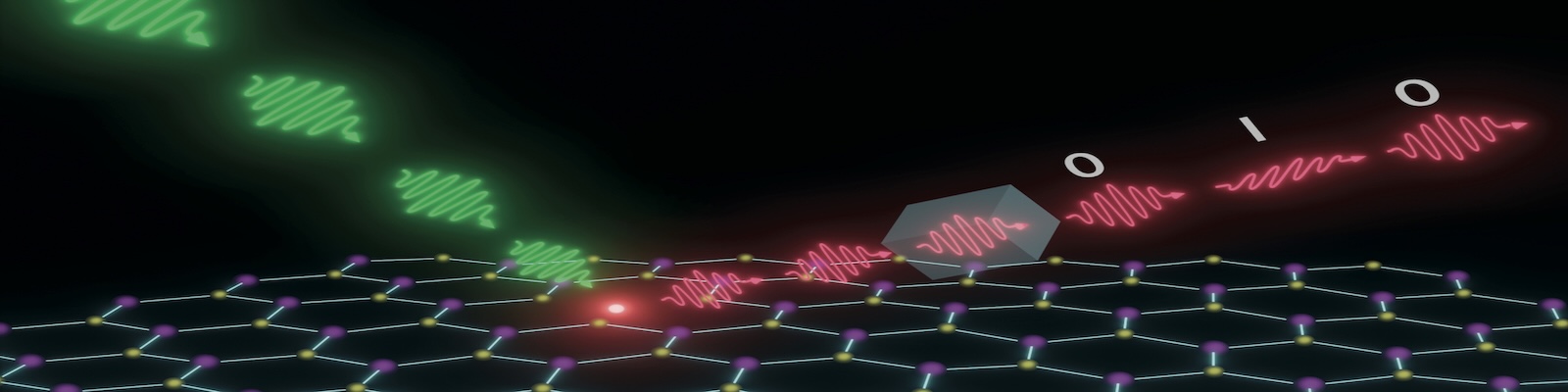

Serkan Ateş is an associate professor in the Department of Physics at the Izmir Institute of Technology, Turkey. He earned his undergraduate degree in Physics from the same institution and completed his MSc and PhD in Physics at the University of Stuttgart, Germany. After completing his doctoral studies, he worked as a postdoctoral researcher at the Technical University of Denmark and the National Institute of Standards and Technology (NIST) in the USA. He also served as a chief research scientist at the National Research Institute of Electronics and Cryptology in Turkey. He is the recipient of the Outstanding Young Scientist Awards (GEBİP) from the Turkish Academy of Sciences (TÜBA) and the Science Academy Young Scientist (BAGEP) Award. His current research interests include solid-state quantum optics, nanophotonics, and quantum technology applications.
Ömer S. Tapşın, Furkan Ağlarcı, Roberto G. Pousa, Daniel K. L. Oi, Mustafa Gündoğan, Serkan Ateş Secure Quantum Key Distribution with Room-Temperature Quantum Emitter Journal Article arXiv:2501.13902, 2025. @article{Tapsin2025, title = {Secure Quantum Key Distribution with Room-Temperature Quantum Emitter}, author = {Ömer S. Tapşın, Furkan Ağlarcı, Roberto G. Pousa, Daniel K. L. Oi, Mustafa Gündoğan, Serkan Ateş}, url = {https://arxiv.org/abs/2501.13902}, doi = {10.48550/arXiv.2501.13902}, year = {2025}, date = {2025-04-24}, journal = {arXiv:2501.13902}, abstract = {On-demand generation of single photons from solid-state quantum emitters is essential to build practical quantum networks and QKD systems by potentially enabling higher secure key rates (SKR) and lower quantum bit error rates (QBER) in short-range distances. Room-temperature operation is particularly important as it eliminates the need for bulky cryogenic setups, reducing complexity and cost for real-world applications. In this work, we showcase the versatility of defects in hexagonal boron nitride (hBN) at room temperature by implementing the B92 protocol. Our experiments yield a sifted key rate (SiKR) of 17.5 kbps with a QBER of 6.49% at a dynamic polarization encoding rate of 40 MHz, and finite-key analysis provides a SKR of 7 kbps, one of the highest achieved for a room-temperature single photon source. We analyzed the non-decoy efficient BB84 using our hBN emitter and other promising quantum dot source for QKD, and compare their key performance with a single quantum repeater scenario. We also explore potential applications of hBN defects beyond QKD and analyze scenarios that could outperform conventional point-to-point QKD schemes. These results underscore the promise of hBN emitters for advancing quantum communication technologies.}, keywords = {}, pubstate = {published}, tppubtype = {article} } On-demand generation of single photons from solid-state quantum emitters is essential to build practical quantum networks and QKD systems by potentially enabling higher secure key rates (SKR) and lower quantum bit error rates (QBER) in short-range distances. Room-temperature operation is particularly important as it eliminates the need for bulky cryogenic setups, reducing complexity and cost for real-world applications. In this work, we showcase the versatility of defects in hexagonal boron nitride (hBN) at room temperature by implementing the B92 protocol. Our experiments yield a sifted key rate (SiKR) of 17.5 kbps with a QBER of 6.49% at a dynamic polarization encoding rate of 40 MHz, and finite-key analysis provides a SKR of 7 kbps, one of the highest achieved for a room-temperature single photon source. We analyzed the non-decoy efficient BB84 using our hBN emitter and other promising quantum dot source for QKD, and compare their key performance with a single quantum repeater scenario. We also explore potential applications of hBN defects beyond QKD and analyze scenarios that could outperform conventional point-to-point QKD schemes. These results underscore the promise of hBN emitters for advancing quantum communication technologies. | 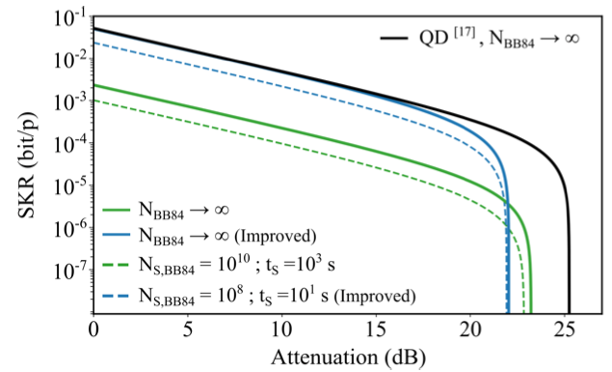 |
Çağlar Samaner, Serkan Ateş Time-Resolved Stokes Analysis of Single Photon Emitters in Hexagonal Boron Nitride Journal Article arXiv:2504.11193, 2025. @article{Samaner_2025, title = {Time-Resolved Stokes Analysis of Single Photon Emitters in Hexagonal Boron Nitride}, author = {Çağlar Samaner, Serkan Ateş}, url = {https://arxiv.org/abs/2504.11193}, doi = {10.48550/arXiv.2504.11193}, year = {2025}, date = {2025-04-15}, journal = {arXiv:2504.11193}, abstract = {Solid-state quantum emitters play a vital role in advancing quantum technologies, particularly in quantum computation and communication, where single-photon polarization acts as a fundamental information carrier. Precise polarization characterization is essential for understanding the mechanisms underlying polarization dynamics, which is critical for developing quantum emitters with minimized polarization-related errors. In this study, we employ the Rotating Quarter-Wave Plate (RQWP) method to comprehensively characterize the polarization state of quantum emitters in hexagonal boron nitride (hBN). By examining both time-averaged and dynamic polarization features, we demonstrate the time-resolved evolution of Stokes parameters from a solid-state single-photon emitter using the RQWP technique. This approach provides more complete polarization information than conventional micro-photoluminescence methods, without requiring modifications to the experimental setup. Our results uncover intricate polarization dynamics in hBN emitters, offering insights that were previously inaccessible. The techniques presented here can be broadly applied to polarization analysis of solid-state quantum emitters across various material platforms.}, keywords = {}, pubstate = {published}, tppubtype = {article} } Solid-state quantum emitters play a vital role in advancing quantum technologies, particularly in quantum computation and communication, where single-photon polarization acts as a fundamental information carrier. Precise polarization characterization is essential for understanding the mechanisms underlying polarization dynamics, which is critical for developing quantum emitters with minimized polarization-related errors. In this study, we employ the Rotating Quarter-Wave Plate (RQWP) method to comprehensively characterize the polarization state of quantum emitters in hexagonal boron nitride (hBN). By examining both time-averaged and dynamic polarization features, we demonstrate the time-resolved evolution of Stokes parameters from a solid-state single-photon emitter using the RQWP technique. This approach provides more complete polarization information than conventional micro-photoluminescence methods, without requiring modifications to the experimental setup. Our results uncover intricate polarization dynamics in hBN emitters, offering insights that were previously inaccessible. The techniques presented here can be broadly applied to polarization analysis of solid-state quantum emitters across various material platforms. | 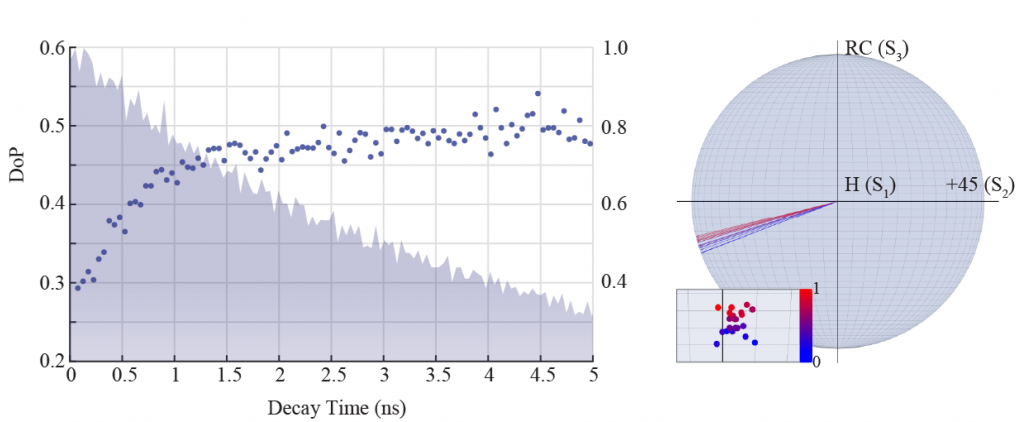 |
Aslı Çakan; Chanaprom Cholsuk; Angus Gale; Mehran Kianinia; Serkan Paçal; Serkan Ateş; Igor Aharonovich; Milos Toth; Tobias Vogl Quantum Optics Applications of Hexagonal Boron Nitride Defects Journal Article Advanced Optical Materials, pp. 2402508, 2025. @article{Çakan2024, title = {Quantum Optics Applications of Hexagonal Boron Nitride Defects}, author = {Aslı Çakan and Chanaprom Cholsuk and Angus Gale and Mehran Kianinia and Serkan Paçal and Serkan Ateş and Igor Aharonovich and Milos Toth and Tobias Vogl}, url = {https://advanced.onlinelibrary.wiley.com/doi/10.1002/adom.202402508}, doi = {10.1002/adom.202402508}, year = {2025}, date = {2025-02-13}, journal = {Advanced Optical Materials}, pages = {2402508}, abstract = {Hexagonal boron nitride (hBN) has emerged as a compelling platform for both classical and quantum technologies. In particular, the past decade has witnessed a surge of novel ideas and developments, which may be overwhelming for newcomers to the field. This review provides an overview of the fundamental concepts and key applications of hBN, including quantum sensing, quantum key distribution, quantum computing, and quantum memory. Additionally, critical experimental and theoretical advances that have expanded the capabilities of hBN are highlighted, in a cohesive and accessible manner. The objective is to equip readers with a comprehensive understanding of the diverse applications of hBN, and provide insights into ongoing research efforts.}, keywords = {}, pubstate = {published}, tppubtype = {article} } Hexagonal boron nitride (hBN) has emerged as a compelling platform for both classical and quantum technologies. In particular, the past decade has witnessed a surge of novel ideas and developments, which may be overwhelming for newcomers to the field. This review provides an overview of the fundamental concepts and key applications of hBN, including quantum sensing, quantum key distribution, quantum computing, and quantum memory. Additionally, critical experimental and theoretical advances that have expanded the capabilities of hBN are highlighted, in a cohesive and accessible manner. The objective is to equip readers with a comprehensive understanding of the diverse applications of hBN, and provide insights into ongoing research efforts. | 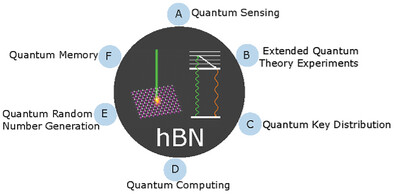 |
Anand Kumar; Çağlar Samaner; Chanaprom Cholsuk; Tjorben Matthes; Serkan Paçal; Yağız Oyun; Ashkan Zand; Robert J. Chapman; Grégoire Saerens; Rachel Grange; Sujin Suwanna; Serkan Ateş; Tobias Vogl Polarization Dynamics of Solid-State Quantum Emitters Journal Article ACS Nano, 2024. @article{Caglar2024, title = {Polarization Dynamics of Solid-State Quantum Emitters}, author = {Anand Kumar and Çağlar Samaner and Chanaprom Cholsuk and Tjorben Matthes and Serkan Paçal and Yağız Oyun and Ashkan Zand and Robert J. Chapman and Grégoire Saerens and Rachel Grange and Sujin Suwanna and Serkan Ateş and Tobias Vogl}, url = {https://doi.org/10.1021/acsnano.3c08940}, doi = {10.1021/acsnano.3c08940}, year = {2024}, date = {2024-02-09}, journal = {ACS Nano}, abstract = {Quantum emitters in solid-state crystals have recently attracted a great deal of attention due to their simple applicability in optical quantum technologies. The polarization of single photons generated by quantum emitters is one of the key parameters that plays a crucial role in various applications, such as quantum computation, which uses the indistinguishability of photons. However, the degree of single-photon polarization is typically quantified using the time-averaged photoluminescence intensity of single emitters, which provides limited information about the dipole properties in solids. In this work, we use single defects in hexagonal boron nitride and nanodiamond as efficient room-temperature single-photon sources to reveal the origin and temporal evolution of the dipole orientation in solid-state quantum emitters. The angles of the excitation and emission dipoles relative to the crystal axes were determined experimentally and then calculated using density functional theory, which resulted in characteristic angles for every specific defect that can be used as an efficient tool for defect identification and understanding their atomic structure. Moreover, the temporal polarization dynamics revealed a strongly modified linear polarization visibility that depends on the excited-state decay time of the individual excitation. This effect can potentially be traced back to the excitation of excess charges in the local crystal environment. Understanding such hidden time-dependent mechanisms can further improve the performance of polarization-sensitive experiments, particularly that for quantum communication with single-photon emitters.}, keywords = {}, pubstate = {published}, tppubtype = {article} } Quantum emitters in solid-state crystals have recently attracted a great deal of attention due to their simple applicability in optical quantum technologies. The polarization of single photons generated by quantum emitters is one of the key parameters that plays a crucial role in various applications, such as quantum computation, which uses the indistinguishability of photons. However, the degree of single-photon polarization is typically quantified using the time-averaged photoluminescence intensity of single emitters, which provides limited information about the dipole properties in solids. In this work, we use single defects in hexagonal boron nitride and nanodiamond as efficient room-temperature single-photon sources to reveal the origin and temporal evolution of the dipole orientation in solid-state quantum emitters. The angles of the excitation and emission dipoles relative to the crystal axes were determined experimentally and then calculated using density functional theory, which resulted in characteristic angles for every specific defect that can be used as an efficient tool for defect identification and understanding their atomic structure. Moreover, the temporal polarization dynamics revealed a strongly modified linear polarization visibility that depends on the excited-state decay time of the individual excitation. This effect can potentially be traced back to the excitation of excess charges in the local crystal environment. Understanding such hidden time-dependent mechanisms can further improve the performance of polarization-sensitive experiments, particularly that for quantum communication with single-photon emitters. | 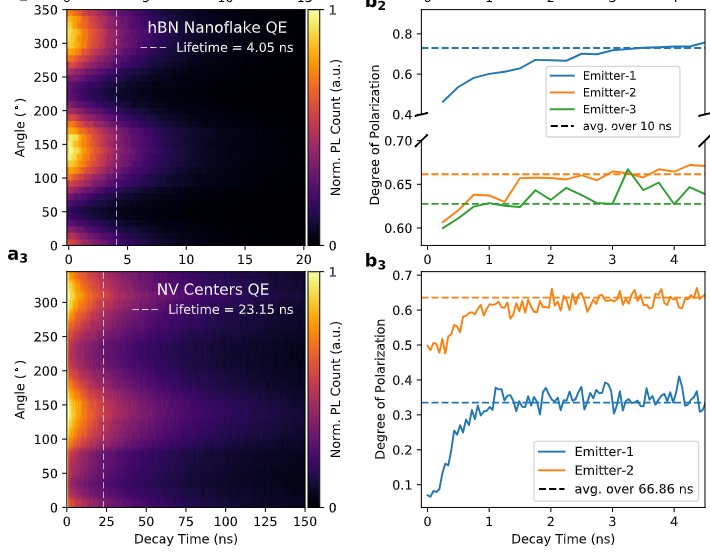 |
Çağlar Samaner; Serkan Paçal; Görkem Mutlu; Kıvanç Uyanık; Serkan Ates Free-Space Quantum Key Distribution with Single Photons from Defects in Hexagonal Boron Nitride Journal Article Advanced Quantum Technologies, 5 , 2022. @article{Caglar2022, title = {Free-Space Quantum Key Distribution with Single Photons from Defects in Hexagonal Boron Nitride}, author = {Çağlar Samaner and Serkan Paçal and Görkem Mutlu and Kıvanç Uyanık and Serkan Ates}, url = {https://onlinelibrary.wiley.com/doi/10.1002/qute.202200059}, doi = {10.1002/qute.202200059}, year = {2022}, date = {2022-08-03}, journal = {Advanced Quantum Technologies}, volume = {5}, abstract = {We present a proof-of-concept demonstration of free-space quantum key distribution (QKD) with single photons generated from an isolated defect in hexagonal boron nitride (hBN). The source, operating at room temperature with a 10% brightness, is integrated into a B92 protocol and a secure key rate (SKR) of 238 bps and a quantum bit error rate (QBER) of 8.95% are achieved with 1 MHz clock rate. The effect of temporal filtering of detected photons on the performance of QKD parameters is also studied. We believe that our results will accelerate the work on improving the performance of optically active defects in hBN and their use in high-performance practical QKD systems.}, keywords = {}, pubstate = {published}, tppubtype = {article} } We present a proof-of-concept demonstration of free-space quantum key distribution (QKD) with single photons generated from an isolated defect in hexagonal boron nitride (hBN). The source, operating at room temperature with a 10% brightness, is integrated into a B92 protocol and a secure key rate (SKR) of 238 bps and a quantum bit error rate (QBER) of 8.95% are achieved with 1 MHz clock rate. The effect of temporal filtering of detected photons on the performance of QKD parameters is also studied. We believe that our results will accelerate the work on improving the performance of optically active defects in hBN and their use in high-performance practical QKD systems. |  |
S Ates; I Agha; A Gulinatti; I Rech; M T Rakher; A Badolato; K Srinivasan Two-Photon Interference Using Background-Free Quantum Frequency Conversion of Single Photons Emitted by an InAs Quantum Dot Journal Article Physical Review Letters, 109 , pp. 147405, 2012. @article{Ates2012, title = {Two-Photon Interference Using Background-Free Quantum Frequency Conversion of Single Photons Emitted by an InAs Quantum Dot}, author = {S Ates and I Agha and A Gulinatti and I Rech and M T Rakher and A Badolato and K Srinivasan}, url = {http://journals.aps.org/prl/abstract/10.1103/PhysRevLett.109.147405}, doi = {10.1103/PhysRevLett.109.147405}, year = {2012}, date = {2012-10-04}, journal = {Physical Review Letters}, volume = {109}, pages = {147405}, abstract = {We show that quantum frequency conversion (QFC) can overcome the spectral distinguishability common to inhomogeneously broadened solid-state quantum emitters. QFC is implemented by combining single photons from an InAs/GaAs quantum dot (QD) at 980 nm with a 1550 nm pump laser in a periodically poled lithium niobate (PPLN) waveguide to generate photons at 600 nm with a signal-to-background ratio exceeding 100∶1. Photon correlation and two-photon interference measurements confirm that both the single photon character and wave packet interference of individual QD states are preserved during frequency conversion. Finally, we convert two spectrally separate QD transitions to the same wavelength in a single PPLN waveguide and show that the resulting field exhibits nonclassical two-photon interference.}, keywords = {}, pubstate = {published}, tppubtype = {article} } We show that quantum frequency conversion (QFC) can overcome the spectral distinguishability common to inhomogeneously broadened solid-state quantum emitters. QFC is implemented by combining single photons from an InAs/GaAs quantum dot (QD) at 980 nm with a 1550 nm pump laser in a periodically poled lithium niobate (PPLN) waveguide to generate photons at 600 nm with a signal-to-background ratio exceeding 100∶1. Photon correlation and two-photon interference measurements confirm that both the single photon character and wave packet interference of individual QD states are preserved during frequency conversion. Finally, we convert two spectrally separate QD transitions to the same wavelength in a single PPLN waveguide and show that the resulting field exhibits nonclassical two-photon interference. | 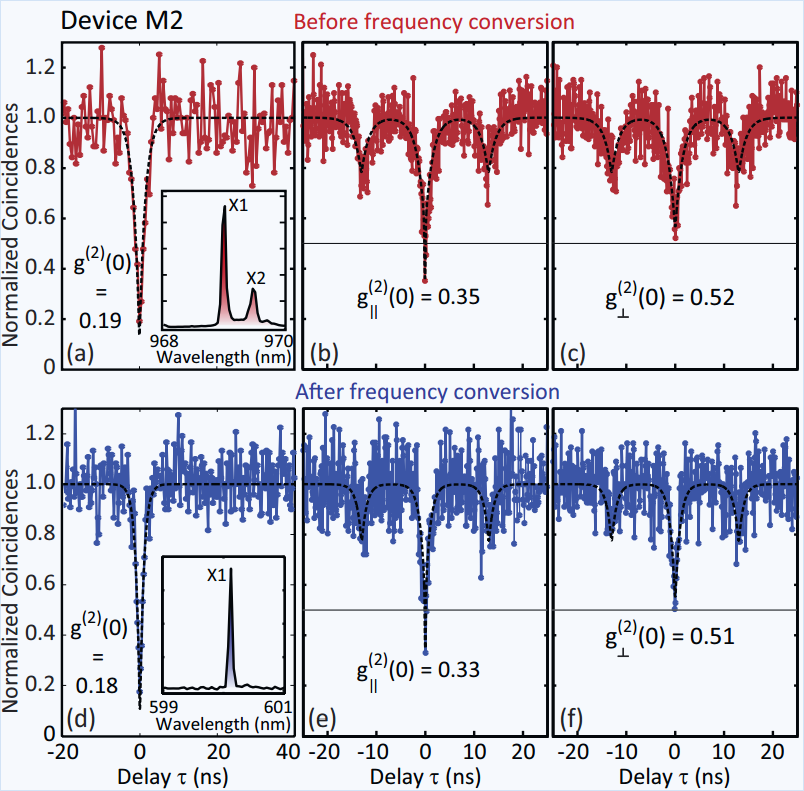 |
K H Madsen; S Ates; T Lund-Hansen; A Löffler; S Reitzenstein; A Forchel; P Lodahl Observation of Non-Markovian Dynamics of a Single Quantum Dot in a Micropillar Cavity Journal Article Physical Review Letters, 106 , pp. 233601, 2011. @article{Madsen2011, title = {Observation of Non-Markovian Dynamics of a Single Quantum Dot in a Micropillar Cavity}, author = {K H Madsen and S Ates and T Lund-Hansen and A Löffler and S Reitzenstein and A Forchel and P Lodahl}, url = {http://journals.aps.org/prl/abstract/10.1103/PhysRevLett.106.233601}, doi = {10.1103/PhysRevLett.106.233601}, year = {2011}, date = {2011-06-06}, journal = {Physical Review Letters}, volume = {106}, pages = {233601}, abstract = {We measure the detuning-dependent dynamics of a quasiresonantly excited single quantum dot coupled to a micropillar cavity. The system is modeled with the dissipative Jaynes-Cummings model where all experimental parameters are determined by explicit measurements. We observe non-Markovian dynamics when the quantum dot is tuned into resonance with the cavity leading to a nonexponential decay in time. Excellent agreement between experiment and theory is observed with no free parameters providing the first quantitative description of an all-solid-state cavity QED system based on quantum dot emitters.}, keywords = {}, pubstate = {published}, tppubtype = {article} } We measure the detuning-dependent dynamics of a quasiresonantly excited single quantum dot coupled to a micropillar cavity. The system is modeled with the dissipative Jaynes-Cummings model where all experimental parameters are determined by explicit measurements. We observe non-Markovian dynamics when the quantum dot is tuned into resonance with the cavity leading to a nonexponential decay in time. Excellent agreement between experiment and theory is observed with no free parameters providing the first quantitative description of an all-solid-state cavity QED system based on quantum dot emitters. | 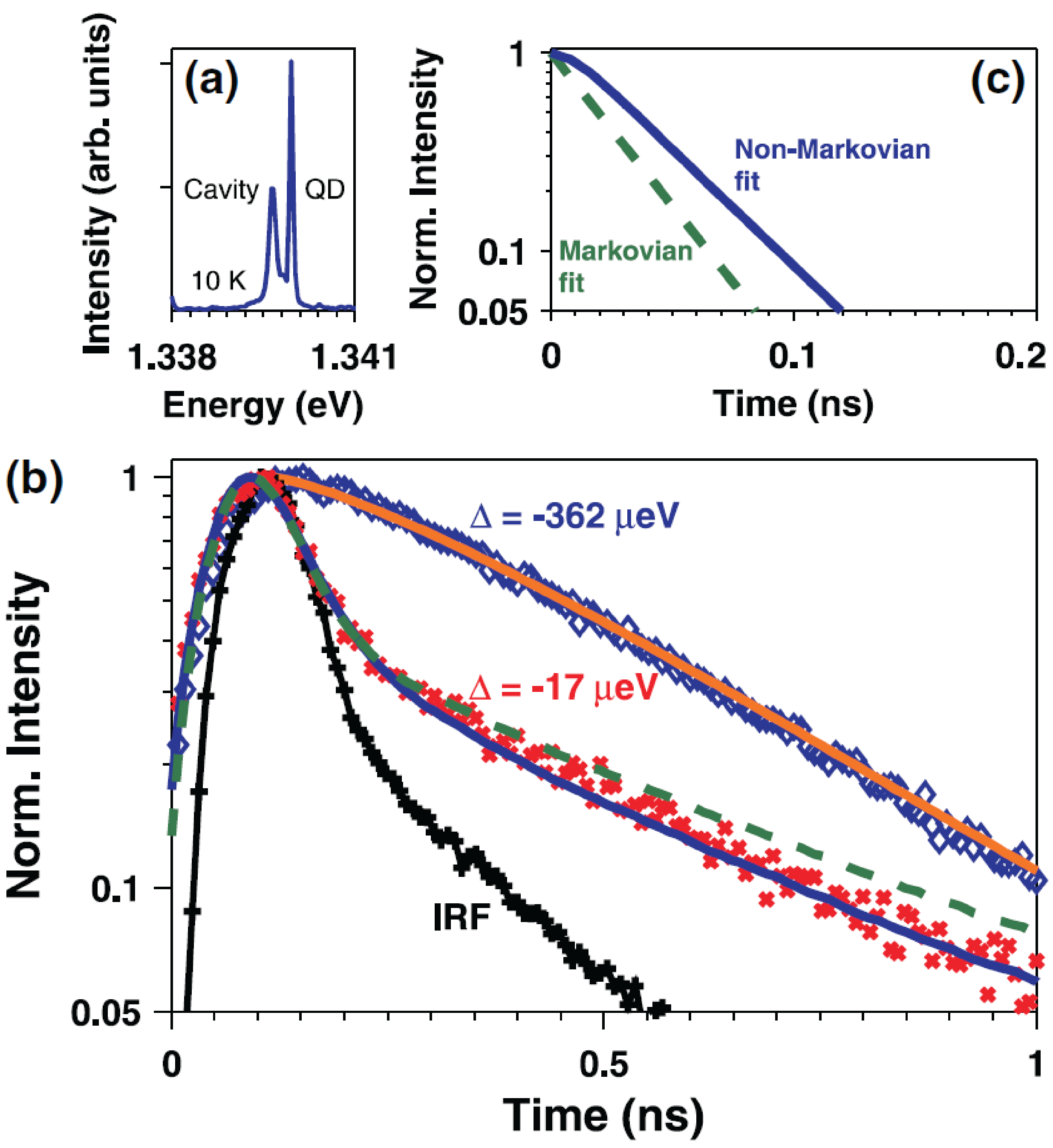 |
S Ates; SM Ulrich; A Ulhaq; S Reitzenstein; A Löffler; S Höfling; A Forchel; P Michler Non-resonant dot–cavity coupling and its potential for resonant single-quantum-dot spectroscopy Journal Article Nature Photonics, 3 , pp. 724 – 728, 2009. @article{Ates2009, title = {Non-resonant dot–cavity coupling and its potential for resonant single-quantum-dot spectroscopy}, author = {S Ates and SM Ulrich and A Ulhaq and S Reitzenstein and A Löffler and S Höfling and A Forchel and P Michler}, url = {http://www.nature.com/nphoton/journal/v3/n12/full/nphoton.2009.215.html}, doi = {nphoton.2009.215}, year = {2009}, date = {2009-10-22}, journal = {Nature Photonics}, volume = {3}, pages = {724 – 728}, abstract = {Non-resonant emitter–cavity coupling is a fascinating effect recently observed as unexpected pronounced cavity resonance emission even in strongly detuned single quantum dot–microcavity systems. This phenomenon indicates strong, complex light–matter interactions in these solid-state systems, and has major implications for single-photon sources and quantum information applications. We study non-resonant dot–cavity coupling of individual quantum dots in micropillars under resonant excitation, revealing a pronounced effect over positive and negative quantum dot mode detunings. Our results suggest a dominant role of phonon-mediated dephasing in dot–cavity coupling, giving a new perspective to the controversial discussions ongoing in the literature. Such enhanced insight is essential for various cavity-based quantum electrodynamic systems using emitters that experience phonon coupling, such as colour centres in diamond and colloidal nanocrystals. Non-resonant coupling is demonstrated to be a versatile ‘monitoring’ tool for observing relevant quantum dot s-shell emission properties and background-free photon statistics.}, keywords = {}, pubstate = {published}, tppubtype = {article} } Non-resonant emitter–cavity coupling is a fascinating effect recently observed as unexpected pronounced cavity resonance emission even in strongly detuned single quantum dot–microcavity systems. This phenomenon indicates strong, complex light–matter interactions in these solid-state systems, and has major implications for single-photon sources and quantum information applications. We study non-resonant dot–cavity coupling of individual quantum dots in micropillars under resonant excitation, revealing a pronounced effect over positive and negative quantum dot mode detunings. Our results suggest a dominant role of phonon-mediated dephasing in dot–cavity coupling, giving a new perspective to the controversial discussions ongoing in the literature. Such enhanced insight is essential for various cavity-based quantum electrodynamic systems using emitters that experience phonon coupling, such as colour centres in diamond and colloidal nanocrystals. Non-resonant coupling is demonstrated to be a versatile ‘monitoring’ tool for observing relevant quantum dot s-shell emission properties and background-free photon statistics. | 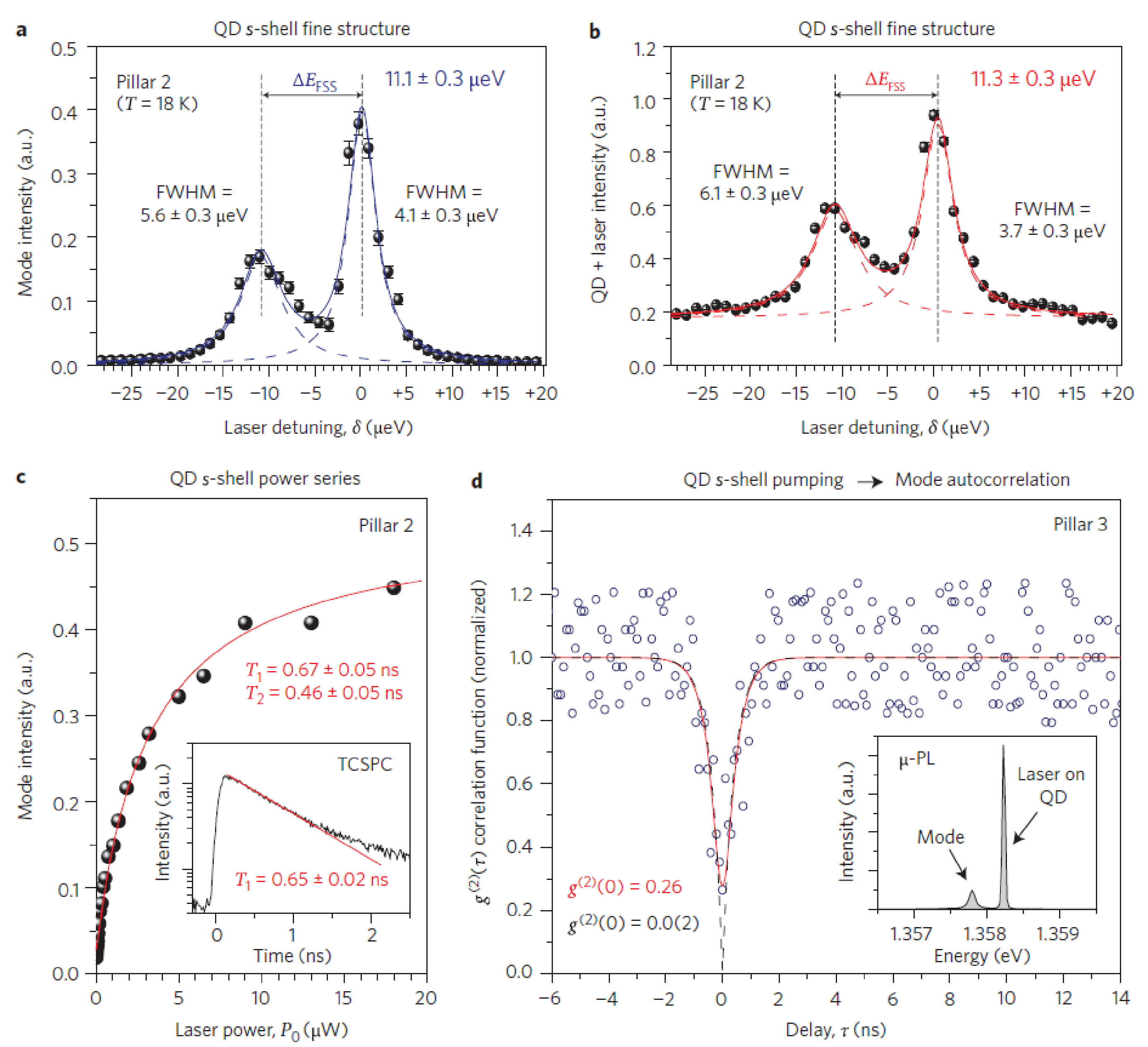 |
S Ates; S M Ulrich; S Reitzenstein; A Löffler; A Forchel; P Michler Post-Selected Indistinguishable Photons from the Resonance Fluorescence of a Single Quantum Dot in a Microcavity Journal Article Physical Review Letters, 103 , pp. 167402, 2009. @article{Ates2009b, title = {Post-Selected Indistinguishable Photons from the Resonance Fluorescence of a Single Quantum Dot in a Microcavity}, author = {S Ates and S M Ulrich and S Reitzenstein and A Löffler and A Forchel and P Michler}, url = {http://journals.aps.org/prl/abstract/10.1103/PhysRevLett.103.167402}, doi = {10.1103/PhysRevLett.103.167402}, year = {2009}, date = {2009-10-16}, journal = {Physical Review Letters}, volume = {103}, pages = {167402}, abstract = {Applying continuous-wave pure resonant s-shell optical excitation of individual quantum dots in a high-quality micropillar cavity, we demonstrate the generation of post-selected indistinguishable photons in resonance fluorescence. Close to ideal visibility contrast of 90% is verified by polarization-dependent Hong-Ou-Mandel two-photon interference measurements. Furthermore, a strictly resonant continuous-wave excitation together with controlling the spontaneous emission lifetime of the single quantum dots via tunable emitter-mode coupling (Purcell) is proven as a versatile scheme to generate close to Fourier transform-limited (T2/(2T1)=0.91) single photons even at 80% of the emission saturation level.}, keywords = {}, pubstate = {published}, tppubtype = {article} } Applying continuous-wave pure resonant s-shell optical excitation of individual quantum dots in a high-quality micropillar cavity, we demonstrate the generation of post-selected indistinguishable photons in resonance fluorescence. Close to ideal visibility contrast of 90% is verified by polarization-dependent Hong-Ou-Mandel two-photon interference measurements. Furthermore, a strictly resonant continuous-wave excitation together with controlling the spontaneous emission lifetime of the single quantum dots via tunable emitter-mode coupling (Purcell) is proven as a versatile scheme to generate close to Fourier transform-limited (T2/(2T1)=0.91) single photons even at 80% of the emission saturation level. | 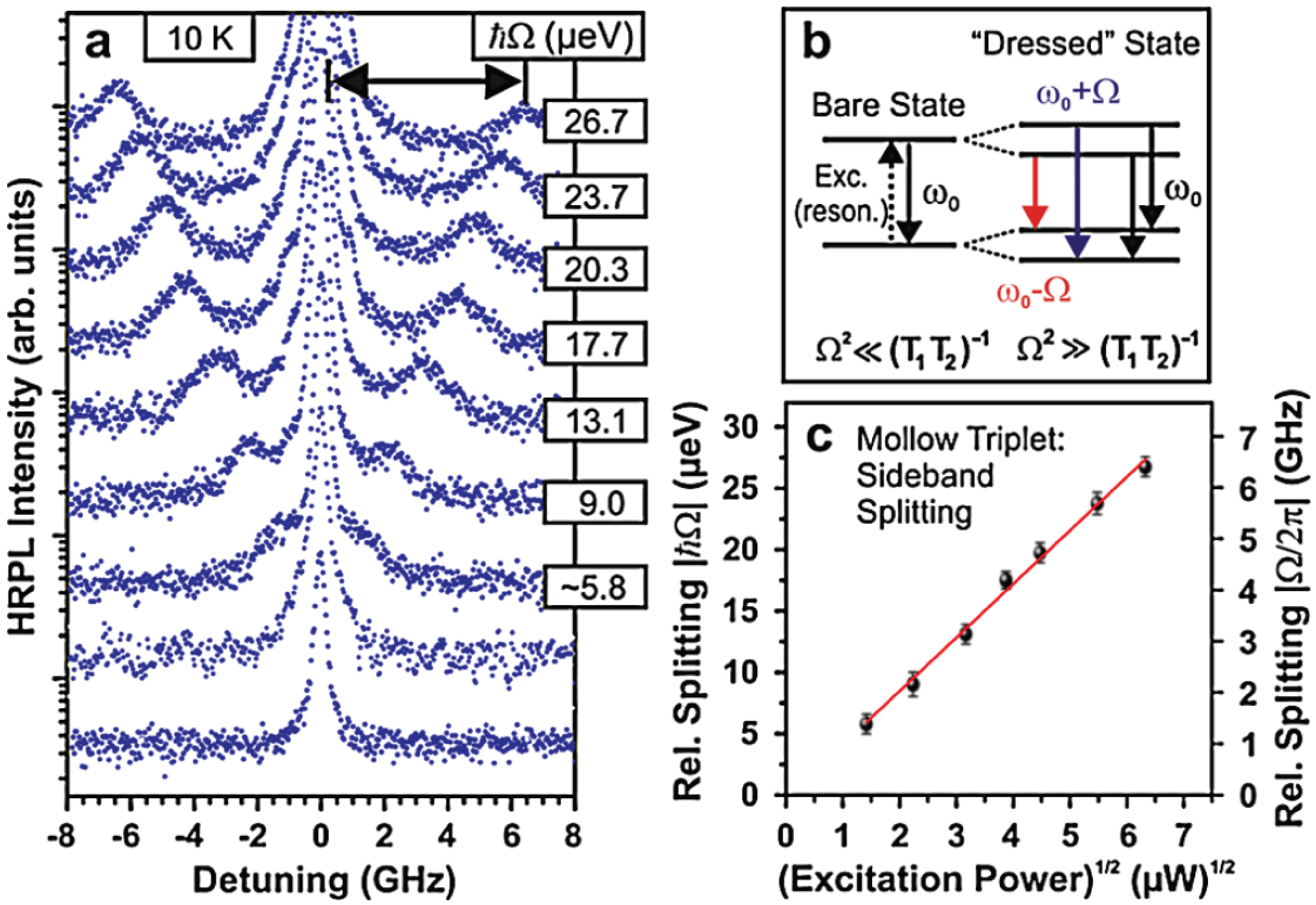 |
S M Ulrich; C Gies; S Ates; J Wiersig; S Reitzenstein; C Hofmann; A Löffler; A Forchel; F Jahnke; P Michler Photon statistics of semiconductor microcavity lasers Journal Article Physical Review Letters, 98 , pp. 043906, 2007. @article{Ulrich2007, title = {Photon statistics of semiconductor microcavity lasers}, author = {S M Ulrich and C Gies and S Ates and J Wiersig and S Reitzenstein and C Hofmann and A Löffler and A Forchel and F Jahnke and P Michler}, url = {http://journals.aps.org/prl/abstract/10.1103/PhysRevLett.98.043906}, doi = {10.1103/PhysRevLett.98.043906}, year = {2007}, date = {2007-01-25}, journal = {Physical Review Letters}, volume = {98}, pages = {043906}, abstract = {We present measurements of first- and second-order coherence of quantum-dot micropillar lasers together with a semiconductor laser theory. Our results show a broad threshold region for the observed high-β microcavities. The intensity jump is accompanied by both pronounced photon intensity fluctuations and strong coherence length changes. The investigations clearly visualize a smooth transition from spontaneous to predominantly stimulated emission which becomes harder to determine for high β. In our theory, a microscopic approach is used to incorporate the semiconductor nature of quantum dots. The results are in agreement with the experimental intensity traces and the photon statistics measurements.}, keywords = {}, pubstate = {published}, tppubtype = {article} } We present measurements of first- and second-order coherence of quantum-dot micropillar lasers together with a semiconductor laser theory. Our results show a broad threshold region for the observed high-β microcavities. The intensity jump is accompanied by both pronounced photon intensity fluctuations and strong coherence length changes. The investigations clearly visualize a smooth transition from spontaneous to predominantly stimulated emission which becomes harder to determine for high β. In our theory, a microscopic approach is used to incorporate the semiconductor nature of quantum dots. The results are in agreement with the experimental intensity traces and the photon statistics measurements. | 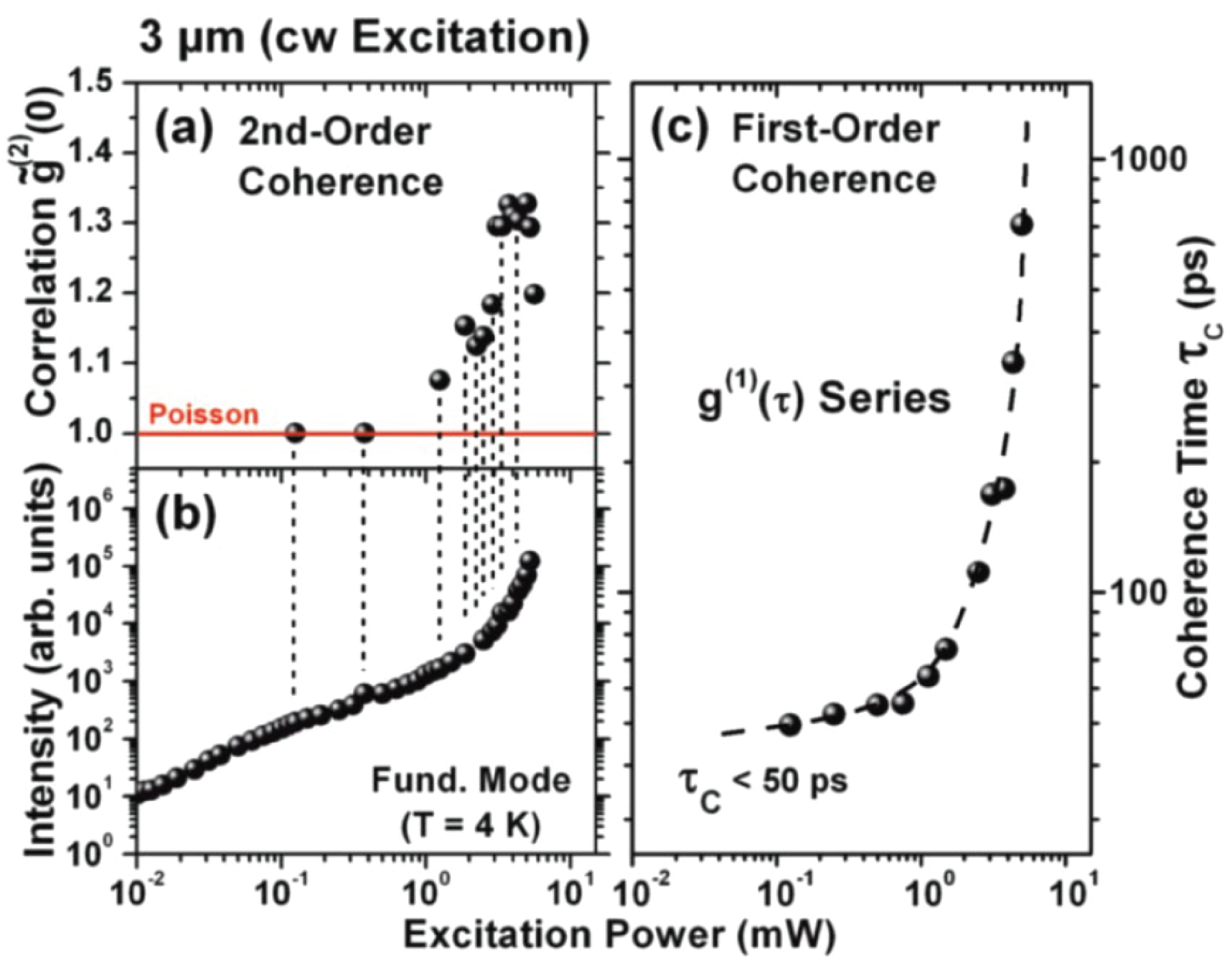 |