Research Topics

Quantum Optics with Defects in hexagonal Boron Nitride
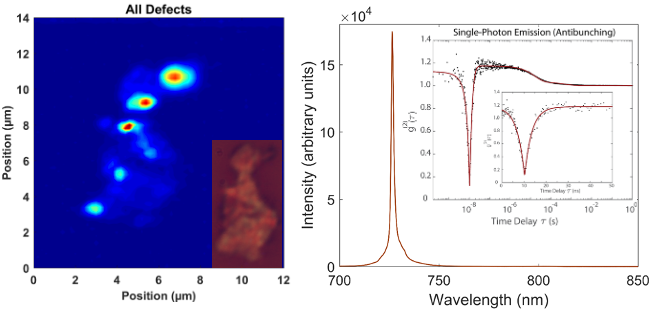
Single emitters in atomically thin materials are of cruicial importance for quantum technology applications. Among several well studied single photon sources, including semiconductor quantum dots and color centers in diamond, hexagonal boron nitride (hBN) presents itself as a reliable host for single emitters operating at room temperature. Our research strictly focuses on fundamental optical properties of single emitters in hBN such as optical coherence, single photon purity and indistinguishability. In addition, we work on electron-phonon interactions for different types of defects in hBN. Finally, we are also interested in integration of   defects in hBN with nanophotonic and plasmonic structures as well as other 2D materials for enhanced light-matter interactions.
Samaner et al,  ACS Nano, 2024
Arı et al, ACS Photonics, 2025
Contact: Çağlar Samaner

Quantum Key Distribution with Solid-State Quantum Emitters
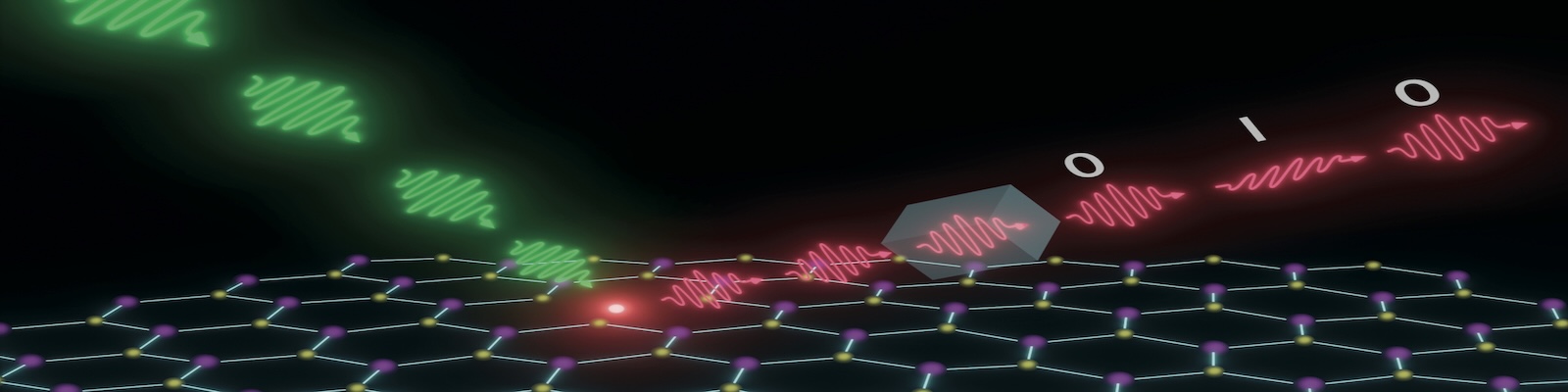
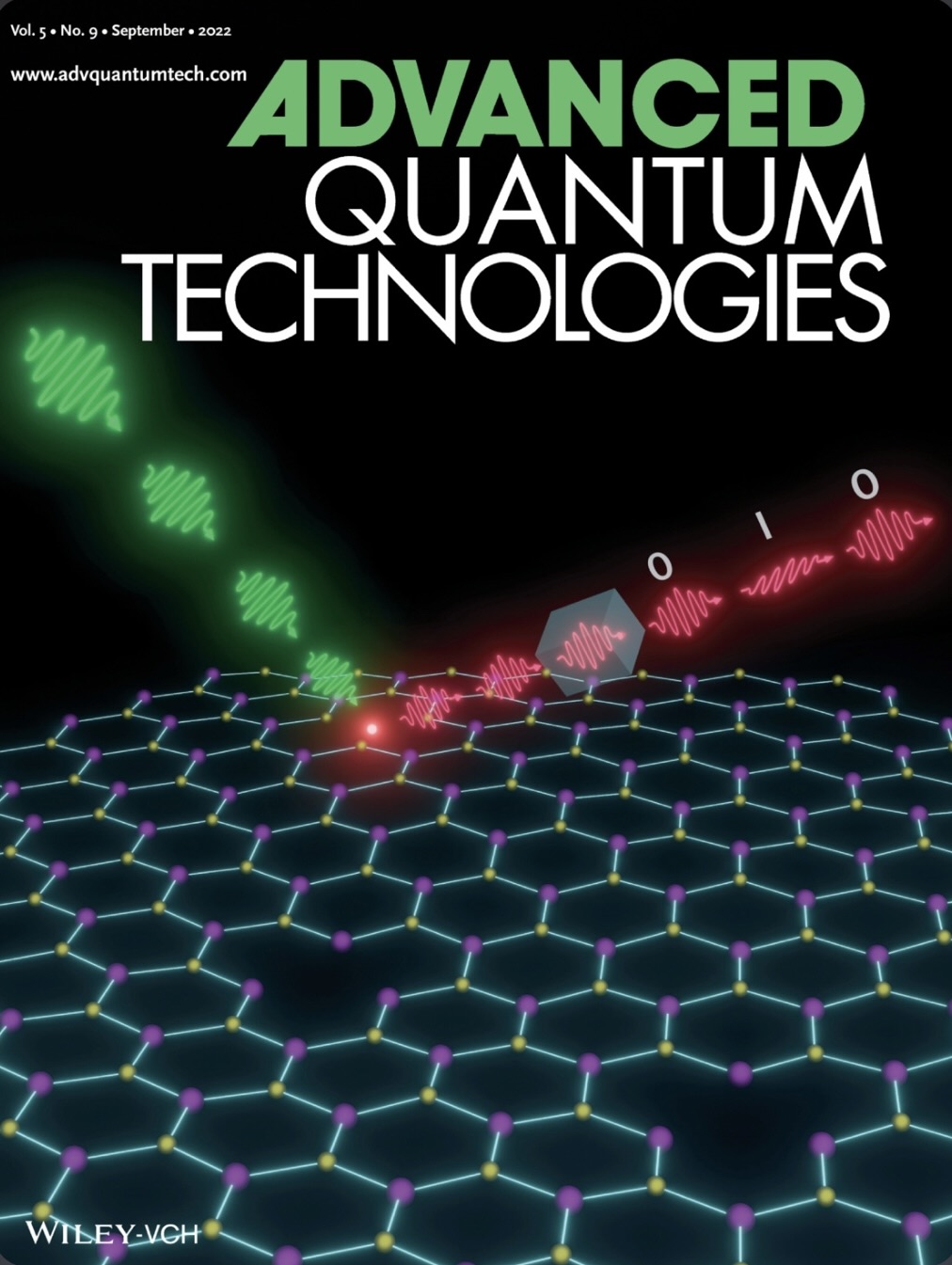
Quantum key distribution (QKD) is one of most forward applications within quantum information technologies. The no-cloning theorem, which underlies the security of QKD, requires the use of an ideal single photon source (SPS).  In addition, properties of SPSs such as wavelength, brightness and purity are predominant parameters that determine the distance of secret key can reach. In this framework, our goal is to investigate different SPSs and integrate them into the long distance QKD concept.
Samaner et al,  Advanced Quantum Technologies, 2022
Tapşın et al, arXiv:arXiv:2501.13902
Contact: Serkan Paçal

Quantum Optics with 2D TMDC Materials
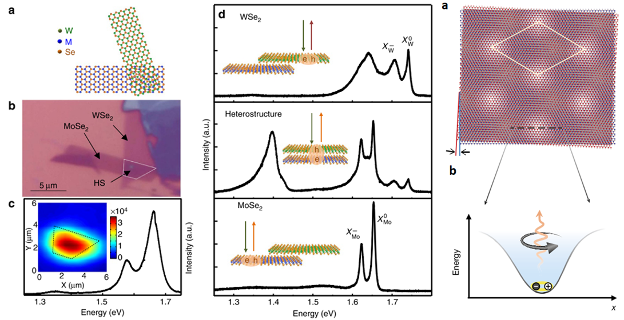
Atomically thin 2D materials have become the fundamental research platform for solid-state quantum optics owing to their rich light-matter interactions, optical properties, and seamless integration into nano-photonic devices. 2D transition metal dichalcogenides (TMDCs) and van der Waals heterostructures from TMDC materials studied extensively in the last decade due to their emergent properties such as formation of interlayer excitons where electrons and holes reside in opposite layers of the heterostructures and moiré patterns due to different lattice mismatch and/or stacking angle of the monolayers. These moiré patterns create their own effective periodic lattice potential which is capable of trapping nearby excitons resulting in isolated single-photon emission.  Our main focus on this research topic is to study the fundamental properties of the moiré trapped interlayer excitons and their scalability into photonic devices for quantum-based applications.
[1] Özçelik et al, Physical Review B – 2016
[2] Seyler et al, Nature – 2019
Contact: Çağlar Samaner